

The 2-Minute Lesson Plan
What to do when you have zero prep time.
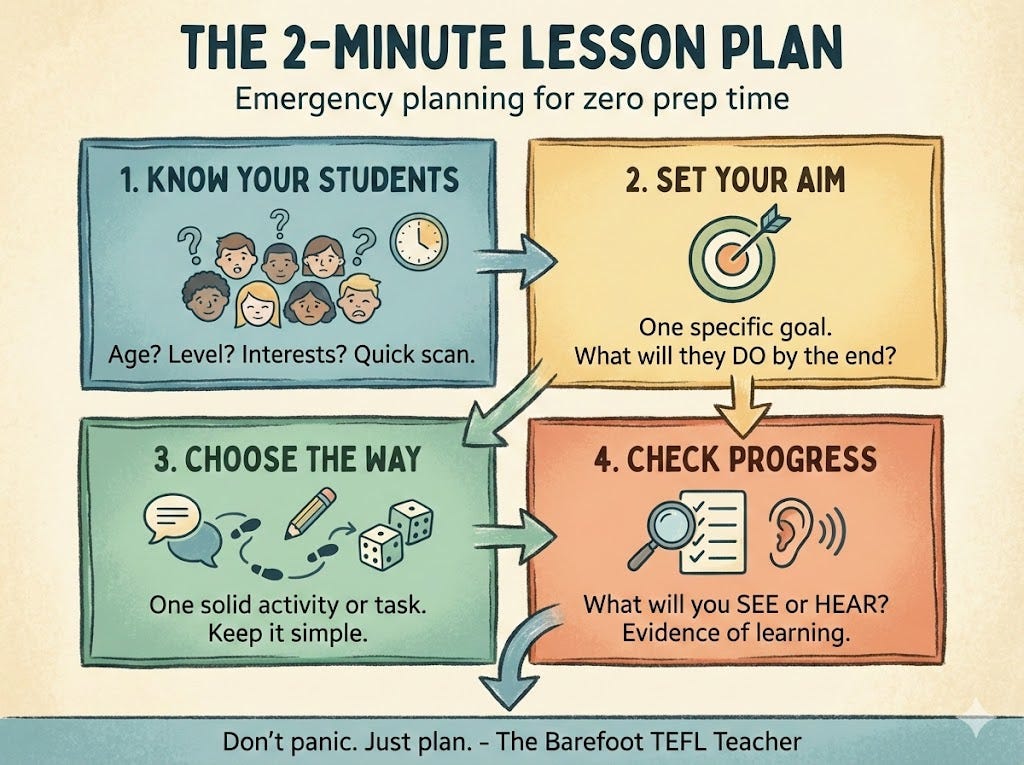
Every teacher eventually faces the nightmare of having to teach a class with zero notice.
A colleague calls in sick, a manager grabs you in the corridor, and suddenly you are told: “You’re teaching in Room 5 in two minutes. Level 2B.”
In emergencies like this, you do not need a written document. You need a mental framework.
Here are the four specific questions that will turn that panic into a proper lesson before you even reach the classroom door.
What is the 2-minute lesson plan?
The 2-minute lesson plan is not a piece of paper you write down. It is a mental checklist you run through while walking to the classroom.
It strips the complex process of lesson planning down to its absolute bare essentials: students, aims, process, and assessment .
Why this framework is essential
I’m sure I don’t need to tell you about Murphy’s Law - at times what can go wrong, does go wrong. Teacher shortages, intensive summer sessions, or sick colleagues, many of us face working conditions where planning time is short or non-existent.
Having a reliable backup process can make the difference between total chaos and “some semblance of a proper lesson”.
Why “planning on the fly” is so challenging
Many years ago, on my teaching training course, I was told good teaching requires detailed plans. For years afterwards, I worried if I didn’t spend ages getting it “just right,” I was failing my students.
When you don’t have time to prepare, it is easy to feel guilty or anxious.
But remember: this situation is not your fault. The reality of schools is that emergencies happen. Your job in that moment is simply to survive the hour and serve the students as best you can.
How to execute the 2-minute plan (step-by-step)
As you walk to the classroom, ask yourself these four fundamental questions. They cover everything a formal plan covers, just faster.
Step 1: What do I know about the students? Quickly assess who is in the room. What is their approximate level? What are their ages? If you don’t know them, what can you safely assume about their background or interests?.
Step 2: Where do I want them to get to? Decide on a single, clear goal. By the end of this lesson, what should they be able to do?. Keep it simple - one specific grammar point or vocabulary set is enough.
Step 3: What is the best way for them to get there? Choose one solid activity or task that will help them achieve that goal. Do not overcomplicate it. A simple “Test-Teach-Test” structure or a communicative task works well here.
Step 4: How can I check their progress? How will you know they learned anything? Decide what you need to see or hear by the end of the class that proves they have improved.
How to get AI to help you do this
If you have your phone in your hand while walking to class, you can use ChatGPT as your emergency planner.
You can ask it to brainstorm activities instantly based on the level and topic you just successfully identified.
Try this prompt: “Please brainstorm a list of five engaging classroom activities that promote the development of [language skill] for [level] students.”.
Pro tip: If you have a paid version of ChatGPT, use the “Projects” feature to keep a folder of “Zero Prep” activities or your syllabus documents ready to go. This allows you to generate a lesson plan instantly without needing to re-explain the context every time.
Top tips and caveats
This is for emergencies only. This isn’t a lifestyle choice. While effective, it is not ideal. Do not rely on this for every class, or you will miss out on the deeper benefits of thoughtful planning.
It scales up. This basic framework is the exact same process used for detailed plans. If you have twenty minutes instead of two, you can simply expand on these four answers to create a more robust plan.
Confidence is key. A plan reduces anxiety and gives you confidence. Even if your plan is just four mental notes, walking into the room knowing your destination (your Aim) allows the students to trust you.
Final thoughts
Planning is a process, not just a piece of paper.
Having a planning process is what saves you when things go wrong. Master these four questions, and you will never fear a last-minute cover class again.
If you liked this article, you’ll love my books:

📝 Lesson Planning for Language Teachers - Plan better, faster, and stress-free.
👩🎓 Essential Classroom Management - Develop calm students and a classroom full of learning.
🏰 Storytelling for Language Teachers - Use the power of storytelling to transform your lessons.
🤖 ChatGPT for Language Teacher 2025 - A collection of AI prompts and techniques to work better, faster.
💭 Reflective Teaching Practice Journal - Improve your teaching in five minutes daily.